The Short Answer
India is on the cusp of becoming the world largest internet economy. With 820 million internet users projected by 2026, a connected population larger than the entire population of Europe, the opportunity for Indian businesses online has never been greater. Yet most Indian businesses are not capturing it.
The numbers tell a sobering story. Despite this enormous and growing audience, 67 percent of Indian business websites fail to generate a single inbound enquiry per week. These websites exist. They have a domain, a hosting plan, and pages with information. But they do not work. They do not bring customers. They do not generate leads. They are, in the most practical sense, invisible.
The gap between a website that exists and a website that works is not a mystery. It comes down to three variables: how fast it loads on a mobile phone, how well it is structured for search engines, and how clearly it directs visitors toward a single action. Indian businesses that get these three things right consistently outperform competitors who spent more money on design but less thought on strategy.
The single most important performance threshold for Indian mobile users is page load time. Research consistently shows that a sub-2-second load time is the conversion threshold. Above two seconds, bounce rates climb sharply on Indian mobile networks. Below two seconds, users stay, read, and enquire. This single metric explains more about website failure in India than any other factor.
Understanding why this gap exists, and what to do about it, is the purpose of this guide. Whether you are building your first website or rebuilding one that has stopped performing, the principles here are grounded in what actually works for Indian audiences in 2026.
Why Most Indian Business Websites Fail
The failure of most Indian business websites is not a technology problem. It is a strategy problem. Most websites are built by agencies or freelancers whose primary objective is delivery, not performance. The client approves a design that looks attractive in a browser on a desktop computer in the agency office. That website then goes live and fails silently on the Android phones of actual Indian customers.
Five patterns explain the majority of failures.
Built for Aesthetics, Not Outcomes
The brief for most Indian website projects begins and ends with how the website looks. The client wants a design that looks professional and reflects the brand. These are legitimate concerns. But a website is not a painting. It is a system for converting attention into commercial outcomes. A website that looks beautiful and converts zero visitors is a failure, regardless of how many design awards it might theoretically win.
Outcome-driven web design starts with a different question. Not: how should this look? But: what do we want visitors to do, and what is stopping them from doing it? Every design decision, from layout to typography to color to navigation, should serve the answer to that question.
Desktop-First in a Mobile-First Market
India is a mobile-first internet market. This is not a trend. It is a structural reality driven by the dominance of smartphones as the primary computing device for hundreds of millions of Indians who never owned a desktop computer. Building a desktop-first website and then adapting it for mobile produces an experience that is functional but rarely excellent on phones.
The correct approach is mobile-first architecture: design the mobile experience first, then expand it for larger screens. This reversal changes every design decision, from navigation patterns to content hierarchy to button placement. It is not a technical adjustment. It is a philosophical one.
No SEO Foundation
Search engine optimization is not something you add to a website after it is built. It is something you architect into the website from the start. Most Indian business websites are built without any consideration for how search engines will discover, crawl, and rank them. No schema markup. No proper heading hierarchy. No keyword research informing page titles and meta descriptions. No internal linking strategy.
The consequence is predictable. The website launches and receives no organic traffic because Google has no reason to surface it for relevant searches. The business then spends money on paid advertising to generate traffic that should have been arriving organically. This is an avoidable tax on businesses that did not build their SEO foundation correctly.
Not Integrated With Lead Management
A website that generates enquiries is only valuable if those enquiries are captured, routed, and followed up on. Most Indian business websites have a contact form that sends an email to a general inbox where it may or may not be seen within a reasonable timeframe. There is no CRM integration, no lead scoring, no automated follow-up, and no visibility into which pages or campaigns generated the enquiry.
This disconnection means that even when a website does generate leads, a significant proportion are lost to slow follow-up or no follow-up at all. The website worked. The system around it did not.
Hosted on Servers Far From Indian Users
The physical location of a web server matters. When an Indian user in Mumbai loads a website hosted on a server in the United States, every request for data travels thousands of kilometres and back. This physical distance, called latency, adds 200 to 400 milliseconds to every page element that loads. On a page with dozens of elements, this compounds into 4 to 6 second load times that drive users away before they see anything.
Indian businesses hosting on international servers without a Content Delivery Network (CDN) are paying a performance penalty that directly reduces their conversion rate every single day. The fix is straightforward: use Indian data centres (AWS Mumbai, Google Cloud Mumbai, Cloudflare Bangalore edge nodes) and configure a CDN to cache assets closer to users.
The Digital Brochure Trap
A digital brochure and a high-performing website are not the same thing. A digital brochure presents information. A high-performing website creates a journey. If your website is built to answer the question "who are we?" rather than "what do you need, and how do we solve it?", you have a digital brochure. It will not generate enquiries regardless of how much you paid for it.
The 6 Pillars of High-Impact Web Design for India
High-performing Indian business websites share six structural characteristics. These are not design preferences or aesthetic choices. They are engineering and strategy decisions that determine whether a website generates commercial outcomes or collects digital dust.
1. Mobile-First Architecture
Mobile-first architecture means designing the smallest screen experience first and building outward. This is not the same as responsive design, which adapts a desktop layout to smaller screens. Mobile-first design asks: what does this experience feel like when a user is holding a phone with one hand on a Delhi Metro platform?
Navigation must work with thumbs. The primary navigation elements, call-to-action buttons, and contact mechanisms must sit in the lower third of the screen where thumbs naturally reach. Navigation that requires reaching to the top of the screen creates friction that costs conversions.
Tap targets must be a minimum of 44 pixels in height and width. This is the size of a fingertip. Smaller tap targets result in mis-taps, user frustration, and abandonment. On Indian Android devices, which tend to have smaller screens and larger displays relative to European and American devices, this is particularly critical.
Text must be legible at arm length without zooming. A minimum body font size of 16 pixels is the baseline. Lines should be no longer than 65 characters to maintain readability. Contrast ratios between text and background must meet accessibility standards for outdoor readability in bright Indian sunlight.
The most important testing instruction for Indian web projects: test on actual Indian Android devices. The Samsung Galaxy A-series (A14, A34, A54) represents the most common device category for Indian internet users. A website that works beautifully on an iPhone 15 or a Samsung Galaxy S24 may be completely broken on a Galaxy A14 with a slower processor and older browser engine.
Test on the Devices Your Customers Actually Use
Before launching any website targeting Indian consumers, test on a Samsung Galaxy A-series device on a 4G connection. If you do not have physical devices, use Chrome DevTools device emulation with the Galaxy A51/71 profile and throttle the connection to Fast 3G. If the website feels slow or awkward in this environment, your customers will feel it too.
Hover-dependent interactions have no place in a mobile-first website. Drop-down menus that appear on hover, tooltips that activate on mouseover, and interactive elements that require cursor precision are invisible or broken on touchscreens. Every interaction on your website must work with a finger tap as the primary input.
2. Performance Engineering for Indian Networks
Performance is not a feature. For Indian mobile users, it is the gate through which all other features must pass. A user who does not wait for your page to load will never see your beautiful design, read your compelling copy, or click your call-to-action. Performance is the prerequisite for everything else.
The target for any Indian business website is a sub-2-second Largest Contentful Paint (LCP) on a 4G connection. LCP measures how long it takes for the largest visible element on the page, usually a hero image or headline, to appear on screen. This is the moment a user perceives the page as loaded, and it is the most critical performance metric for conversion.
Image optimization is the single highest-leverage performance intervention for most websites. Images typically account for 60 to 80 percent of page weight. Converting images to WebP format reduces file size by 30 to 50 percent compared to JPEG with no visible quality difference. Adding lazy loading for images below the fold means the browser only downloads images as users scroll to them, dramatically reducing initial load time.
JavaScript management is the second highest-leverage intervention. Modern websites often load hundreds of kilobytes of JavaScript that is not needed for the initial page view. Deferring non-critical JavaScript (analytics, chat widgets, marketing pixels) until after the page has rendered means users see and interact with content faster. Every JavaScript file that blocks rendering delays the moment a user can start reading.
Infrastructure matters as much as code. Hosting your website on servers physically located in India eliminates the latency penalty from international hosting. AWS Mumbai, Google Cloud Mumbai, and Azure India Central are the primary options for Indian business websites. Adding Cloudflare with Bangalore edge nodes in front of your hosting extends fast delivery to users across Tier 2 and Tier 3 Indian cities.
1 Second Load Improvement = 7% Conversion Increase
Google and Deloitte research on Indian mobile web performance found that a 1-second improvement in page load time correlates with a 7 percent increase in conversion rate. For a business generating 100 leads per month from their website, improving load time from 4 seconds to 2 seconds could theoretically add 14 to 21 additional leads per month at zero additional marketing cost.
Google Core Web Vitals are the performance benchmarks that directly influence search rankings. The three metrics are Largest Contentful Paint (load performance), Interaction to Next Paint (interactivity), and Cumulative Layout Shift (visual stability). Websites that score Good on all three Core Web Vitals receive a ranking boost in Google search results. For Indian businesses competing for local search visibility, Core Web Vitals compliance is not optional.
Performance optimization connects directly to conversion outcomes. For more on the relationship between technical performance and lead generation, see our guide on 4 proven methods to increase your website conversions.
3. SEO-Ready Structure From Day One
The cost of adding SEO to a website that was not built for it is significantly higher than the cost of building SEO into the website from the start. Retrofitting schema markup, restructuring heading hierarchies, rewriting URL structures, and rebuilding internal linking on a live website is disruptive, expensive, and often incomplete. The correct time to implement SEO architecture is before the first line of code is written.
Schema markup is structured data that tells search engines exactly what your page content represents. For Indian business websites, LocalBusiness schema communicates your business name, address, phone number, hours, and service area to Google. Product schema enables rich product results in search. FAQ schema can generate accordion-style results that dramatically increase click-through rates. Article schema signals editorial content quality.
Proper heading hierarchy is both a usability and an SEO requirement. Every page must have exactly one H1 tag that contains the primary keyword for that page. H2 tags should organize the main sections of content. H3 tags break down subsections. This hierarchy helps both users navigate content and search engines understand what the page is about. Websites built by graphic designers who use heading tags for visual styling rather than semantic meaning are penalized by search engines.
URL structure must be logical, keyword-rich, and permanent. A URL like magicworksitsolutions.com/services/web-design-india is infinitely more valuable than magicworksitsolutions.com/page?id=247 for both users and search engines. Every URL change after a website is indexed costs link equity and can create 404 errors that damage rankings. Get the URL structure right before launch.
India-specific keyword architecture means understanding how Indian users actually search. Indian English has distinct patterns: users search for "website design cost in Pune" not "web design pricing". They search for "best digital marketing company in Mumbai" not "leading digital marketing agency". Keyword research for Indian audiences must account for these linguistic patterns, regional city modifiers, and service-specific terminology.
Internal linking strategy distributes authority throughout your website and helps search engines discover all your pages. Every service page should link to related service pages, relevant blog content, and case studies. Every blog post should link to relevant service pages and related content. This network of internal links is the architecture that determines which pages on your website rank for competitive terms.
The True Cost of SEO Retrofitting
A website built without SEO architecture typically requires 40 to 60 additional hours of SEO remediation work before it can rank competitively. At agency rates of Rs 2,000 to Rs 5,000 per hour, this means Rs 80,000 to Rs 3,00,000 in additional work that could have been avoided by briefing for SEO from the start. Include SEO requirements in every website brief.
4. Conversion-Focused Layout
A conversion-focused layout is one where every design decision is subordinate to the goal of getting visitors to take a single, specific action. This is harder than it sounds. Most stakeholders have opinions about design. They want to showcase their team, their history, their awards, their values, their social media feeds. A conversion-focused website designer must be comfortable saying: that element does not serve the conversion goal, so it does not belong above the fold.
The call to action must be visible above the fold on every device. Above the fold means visible without scrolling. On mobile, this means the first 600 to 700 pixels of vertical space. Whatever your primary conversion action is, whether that is requesting a quote, booking a consultation, or downloading a lead magnet, the button to take that action must be visible the moment the page loads. Users should never have to look for what to do next.
WhatsApp is the primary contact mechanism for Indian business audiences. India has over 500 million WhatsApp users, and the majority of Indian professionals prefer WhatsApp communication over email for business enquiries. A prominent WhatsApp button, ideally a floating widget visible on every page, is not optional for Indian business websites. It is the highest-converting contact mechanism available.
Trust signals must appear on every page, not just the home page. Trust signals include client logos, testimonials with full names and company names (not just initials), Google review ratings, industry certifications, years in business, and case study results with specific numbers. Indian audiences are appropriately skeptical of business websites, particularly for high-value purchases. Trust signals reduce this skepticism and increase conversion rates.
The landing page versus homepage distinction is critical for campaigns. A homepage serves multiple audiences and multiple purposes. A landing page serves one audience and one purpose. Paid search campaigns (Google Ads, Meta Ads) should never send traffic to the homepage. They should send traffic to a dedicated landing page with one headline, one value proposition, one call to action, and no navigation to distract or divert the visitor.
“Your website is the only sales asset that works 24 hours a day, 365 days a year. But only if you build it to sell.”
5. Inclusive and Accessible Design
Accessibility is not a compliance checkbox. For Indian businesses targeting diverse audiences, it is a competitive advantage. India has over 500 million people who prefer to consume content in regional languages. Hindi-speaking users represent the largest online audience segment after English speakers, followed by Tamil, Telugu, Kannada, Bengali, and Marathi speakers. Businesses that serve these audiences in their preferred language capture markets that English-only competitors cannot reach.
Regional language support on a website requires more than translation. It requires proper font rendering for Devanagari, Tamil, Telugu, and other scripts. It requires right-to-left text support for Urdu. It requires ensuring that translated content is indexed by Google in the appropriate language, which means using hreflang tags to tell search engines which language version to serve to which users. Regional language users are growing at 18 percent annually in India, faster than English-language internet adoption.
Alt text for images serves two purposes: it describes images to visually impaired users who use screen readers, and it provides context to search engines that cannot see images. Every image on your website should have a descriptive alt text that explains what is in the image and, where relevant, includes target keywords. This is one of the simplest SEO interventions available and one of the most commonly neglected.
Color contrast ratios must meet WCAG 2.1 AA standards, which require a contrast ratio of at least 4.5:1 for normal text and 3:1 for large text. This is not just a accessibility concern in India. Indian mobile users frequently use their phones outdoors in bright sunlight, which reduces effective screen contrast. Content that is borderline readable in a dark room may be completely unreadable on a phone screen in direct sunlight.
Keyboard navigation means that every interactive element on the website, forms, buttons, navigation menus, and modal dialogs, can be accessed and operated using only a keyboard. This is essential for users with motor impairments who cannot use a touchscreen or mouse. It is also essential for users who rely on switch access devices. In India, where disability affects over 26 million people, accessibility is not a niche concern.
Regional Language Growth in India
Regional language internet users in India are growing at 18 percent annually. By 2026, Hindi internet users alone will outnumber English internet users. Businesses that invest in regional language content and website localization today are building a competitive moat that will be extremely difficult for competitors to close later.
6. Scalable and Secure Architecture
A website that cannot grow with your business is not an asset. It is a liability that will eventually require a complete rebuild. Scalable architecture means making technology decisions at the start of a project that will not become constraints in three years when your business has grown. This requires thinking beyond the immediate project brief to the business trajectory.
HTTPS is non-negotiable in 2026. Google has marked HTTP websites as not secure in Chrome since 2018. Any Indian business website still running on HTTP is losing trust signals, search ranking, and conversion rate simultaneously. SSL certificates are available for free through Let us Encrypt and are included in virtually all modern hosting packages. There is no legitimate reason for any business website to operate without HTTPS.
Regular security updates are the baseline operational requirement for any website built on a content management system. WordPress, which powers over 40 percent of the web, is a frequent target for automated attack scripts that probe for outdated plugins and themes with known vulnerabilities. A website that is not updated regularly is not a question of whether it will be compromised, but when.
Version control means that every change to the website codebase is tracked, reversible, and attributable. Git-based version control with a remote repository (GitHub, GitLab, Bitbucket) means that a bad deployment can be reversed in minutes rather than hours. It also means that multiple developers can work on the website simultaneously without overwriting each other work. Version control is standard practice for any professional web development project.
CMS flexibility means selecting a content management system based on your actual requirements rather than the agency preference or the lowest quote. WordPress is the right choice for content-driven and service business websites that require frequent content updates and strong SEO capabilities. Shopify is the right choice for e-commerce websites that need product management, payment processing, and inventory management.
India data residency is an emerging regulatory consideration. The Digital Personal Data Protection Act 2023 imposes obligations on how Indian personal data is stored and processed. While the specific regulations around data residency for business websites are still being finalized, hosting customer data, including contact form submissions and analytics, on Indian servers provides both a performance benefit and a compliance alignment benefit.
Backup Is Not Optional
Every business website should have an automated daily backup stored in a location separate from the hosting server. If your website is hacked, infected with malware, or accidentally broken by a content update, a clean backup is the difference between a 30-minute restoration and a 30-day disaster. Verify that your hosting provider includes automated backups, and test your restoration process at least once per year.
Platform Selection for Indian Businesses
The choice of platform is one of the most consequential decisions in any web project. It determines what your website can do, how much it costs to maintain, how flexible it can be as your business evolves, and what technical skills you need to manage it. There is no universally correct platform. The correct platform depends on what your business needs to achieve.
Three platforms account for the majority of professionally built Indian business websites: WordPress, Shopify, and custom development. Understanding when each is the right choice will help you evaluate quotes and make an informed decision rather than deferring entirely to the agency or developer you hire.
WordPress: Content and Service Businesses
WordPress is the right platform for businesses whose primary website goal is content publishing, service presentation, lead generation, and SEO. It powers over 43 percent of all websites on the internet and has the most mature ecosystem of plugins, themes, and developer expertise in the world. In India, WordPress development is the most widely available skill, which means more competitive pricing and easier access to maintenance support.
Typical build cost: Rs 30,000 to Rs 1,50,000 depending on complexity, custom design requirements, and the number of page templates needed.
WordPress is the right choice when: you publish content regularly (blog, news, resources), you offer professional services and want strong local SEO, you need a portfolio or case studies section, and you want the flexibility to manage and update content yourself without developer involvement.
WordPress is the wrong choice when: you need complex e-commerce with hundreds of products and inventory management, you are building a SaaS product with user authentication and dynamic data, or you need real-time data integrations that require significant custom backend logic.
Shopify: E-Commerce Businesses
Shopify is the right platform for Indian businesses selling products online. It handles payment processing (including UPI, Razorpay, and PayU integrations for Indian payments), inventory management, shipping integrations, GST compliance, and return management out of the box. The cost of building these features custom on any other platform would exceed the Shopify build cost many times over.
Typical build cost: Rs 40,000 to Rs 2,00,000 for a custom Shopify theme build with Indian payment gateway integrations. Ongoing Shopify subscription fees apply.
Shopify is the right choice when: you sell physical or digital products, you need inventory management across multiple locations, you want to scale internationally, and you need built-in analytics for e-commerce performance tracking.
For a detailed guide on Shopify development for Indian businesses, see our article on Shopify development solutions.
Custom Development: Complex Requirements
Custom development is the right choice when your business requirements genuinely cannot be met by an existing platform without excessive compromise. SaaS applications, marketplace platforms, property portals, booking systems with complex logic, and multi-tenant applications all require custom development. The added cost is justified when the business model depends on capabilities that no off-the-shelf platform provides.
Typical build cost: Rs 2,00,000 to Rs 25,00,000 and above, depending on scope, team size, and timeline. Custom builds require ongoing developer involvement for maintenance and iteration.
Custom development is frequently chosen for the wrong reasons: a desire for complete control, distrust of platforms, or a belief that the business requirements are more unique than they actually are. Before committing to custom development, validate that your requirements genuinely cannot be served by WordPress with appropriate plugins or a headless CMS approach.
Platform Lock-In Risk
Every platform creates some degree of lock-in. WordPress websites can be migrated to other platforms but the process is expensive and time-consuming. Shopify stores can export products and customer data but themes and custom apps do not transfer. Custom-built websites are entirely dependent on the original development team unless the codebase is clean, documented, and built on standard frameworks. Before choosing a platform, ask your developer: if we need to migrate this website in three years, what does that process look like?
Understanding platform options is one consideration when evaluating web development partners. See our guide on what sets top web development agencies apart for a broader evaluation framework.
For a detailed breakdown of website development costs across platform types, see our comprehensive guide on website development cost in India.
3 Things Indian Businesses Get Wrong During Web Projects
Web project failures in India follow recognizable patterns. After working with businesses across multiple industries and project scales, three mistakes appear consistently enough to warrant specific attention. Avoiding these three mistakes will not guarantee a successful project, but making any of them will almost certainly guarantee an unsuccessful one.
Not Defining Success Metrics Before the Build
The most common failure mode in Indian web projects is starting a build without defining what success looks like. The brief focuses entirely on deliverables: we need a 10-page website, a contact form, a gallery section, and mobile compatibility. There is no discussion of what the website should achieve commercially.
Without defined success metrics, there is no way to evaluate whether the finished website is working. Is it generating enough enquiries? Is the enquiry quality improving? Is the cost per lead declining? These questions cannot be answered if the metrics were never defined. The result is a website that looks finished but has no accountability framework.
Before starting any web project, define: monthly enquiry target, primary conversion action, target cost per lead, and the 90-day review date on which you will evaluate performance against these targets. Document these in writing before any design work begins.
Choosing Price Over Expertise
India has one of the world most competitive markets for web development services. Quotes for the same project specification can range from Rs 15,000 to Rs 1,50,000 depending on the provider. The instinct to choose the lowest quote is understandable. The consequences of that choice are consistently expensive.
A Rs 20,000 website that takes three months to build, launches with broken mobile layouts, has no SEO foundation, and generates zero leads is not a Rs 20,000 website. It is a Rs 20,000 investment plus the cost of rebuilding it in 18 months when the business decides the website is not working. The total cost frequently exceeds what the higher-quality option would have cost in the first place.
Expertise in web development manifests in ways that are difficult to see in a portfolio: performance optimization knowledge, SEO architecture experience, conversion rate optimization principles, and code maintainability. Ask prospective agencies for performance scores on their recent work (Google PageSpeed Insights), references from clients 12 months after launch, and their process for measuring website success.
The Launch-and-Forget Mistake
The third most common mistake is treating a website launch as the end of the project rather than the beginning. A website that is not measured, tested, and improved after launch will decline in performance relative to competitors who are iterating. Set a 90-day post-launch review as a contract deliverable, not an optional follow-up.
No Post-Launch Optimization Plan
Every website launched without a post-launch optimization plan will underperform its potential. The launch is the beginning of a learning process, not the end of a build process. Real user data, from Google Analytics, Search Console, heatmaps, and session recordings, reveals how actual visitors interact with the website versus how the design team imagined they would.
A post-launch optimization plan includes: monthly Google Analytics review to track conversion rate, bounce rate by page, and traffic source quality; quarterly A/B testing of key pages (home page, service pages, contact page); six-monthly technical SEO audit to identify crawl issues, broken links, and Core Web Vitals regressions; and annual review of the overall content strategy to ensure the website is addressing the current search intent of your target audience.
Businesses that treat their website as a dynamic, continuously improving asset consistently outperform those that treat it as a static brochure. The compounding effect of monthly improvements over 24 months is dramatically larger than the impact of any single design decision at launch.
Web Design Trends for India 2026
Trends in web design are only useful insofar as they reflect genuine changes in user behavior and technology. The following developments are not aesthetic fashion. They are structural shifts in how Indian internet users discover, consume, and act on digital content.
Hindi-first content design is emerging as a significant differentiator. As Hindi internet users overtake English internet users in absolute numbers, the assumption that English is the default language for professional content is becoming a liability for businesses targeting mid-market and tier 2 city audiences. Websites that offer a seamless, complete Hindi experience, not just a translated version of English content, are capturing audiences that English-only competitors are invisible to.
Voice search optimization for Indian English accents is an underserved opportunity. Indian English has distinct phonetic patterns that differ significantly from American and British English. Voice search queries in India are also longer and more conversational than typed queries: "which is the best digital marketing company near me in Pune" rather than "digital marketing Pune". FAQ-structured content and conversational, question-answering copy are the technical responses to this behavioral shift.
WhatsApp Business API integration is moving from a nice-to-have to an expectation for B2B and professional service websites. The ability to initiate a WhatsApp conversation directly from a website button, and have that conversation managed through a CRM-integrated Business API account, creates the highest-converting contact mechanism available to Indian businesses. The companies that implement this well are seeing 3 to 5 times higher contact conversion rates than those relying on email forms.
UPI payment trust badges are increasingly important conversion signals for e-commerce and service websites that accept online payments. The UPI logo, alongside Razorpay, PayU, and Paytm logos, communicates payment security in a language that Indian consumers recognize immediately. Websites without these trust signals lose conversion to competitors who display them prominently.
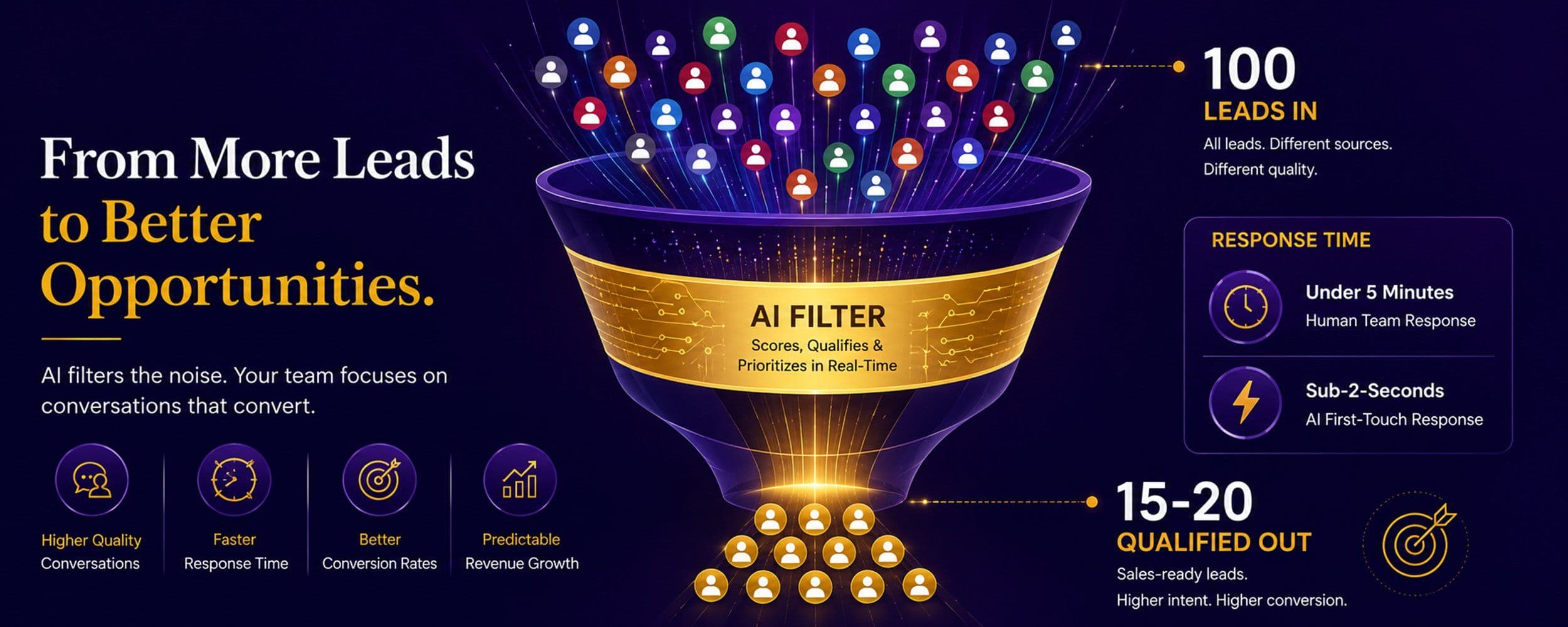
AI-powered chat on landing pages is shifting from experimental to operational. Indian businesses are deploying lightweight chatbots on high-traffic landing pages to capture leads outside business hours, qualify visitor intent, and reduce the time-to-response from hours to seconds. The technology investment is modest; the impact on lead capture rate can be significant.
The Self-Audit Checklist: 10 Questions to Evaluate Your Current Website
Use this checklist to evaluate your current website honestly. Score one point for each question you can answer yes to. The scoring interpretation follows.
Question 1: Does your website load in under 2 seconds on a mobile phone connected to 4G? Test this using Google PageSpeed Insights (pagespeed.web.dev). Enter your URL and check the Mobile score and LCP metric.
Question 2: Does your website have a prominent WhatsApp contact button visible on every page? This should be a floating widget or fixed button, not just a link buried in the footer.
Question 3: Can a visitor take your primary conversion action (contact, quote request, purchase) without scrolling on mobile? Open your website on a phone and check the first screen.
Question 4: Does your website appear on the first page of Google for your primary service keyword plus your city? Search for "[your service] [your city]" in an incognito browser tab.
Question 5: Does your website have schema markup for your business type (LocalBusiness, Product, or Service)? Check using Google Rich Results Test (search.google.com/test/rich-results).
Question 6: Is your website connected to Google Analytics 4 and Google Search Console? You need both to understand traffic, behavior, and search performance.
Question 7: Does your website generate at least 3 qualified enquiries per week from organic traffic? If you do not know this number, you do not have adequate analytics.
Question 8: Has your website had a technical SEO audit in the last 12 months? This should include crawl error review, Core Web Vitals assessment, and internal linking analysis.
Question 9: Is your website hosted on Indian servers or a CDN with Indian edge nodes? Check your hosting provider location and whether Cloudflare or similar is configured.
Question 10: Does every service page on your website have a clear, specific call to action? Not "contact us" but "Request a free web design consultation" or "Get your quote in 24 hours".
How to Interpret Your Score
Score 8-10: Your website has a strong foundation. Focus on conversion rate optimization and content quality. Score 5-7: Your website has significant gaps. Prioritize mobile performance, WhatsApp integration, and analytics setup. Score 0-4: Your website is unlikely to be generating meaningful commercial outcomes. A strategic rebuild, not an incremental update, is the appropriate response.
Honesty in this self-audit is critical. It is easy to rationalize a borderline yes for questions where the honest answer is no. The point of this exercise is not to feel good about your current website. It is to identify the specific interventions that will make your website generate more commercial outcomes.
Sources and Data
1. IAMAI-Kantar ICUBE Report 2024: Internet in India. Internet and Mobile Association of India. Projects 820 million internet users by 2026 with 76 percent mobile share of web traffic.
2. Google and Deloitte: "The State of Online Retail Performance" (adapted for India market). Documents the 7 percent conversion improvement per 1-second load time improvement on mobile.
3. Statcounter Global Stats: Mobile Operating System Market Share India, 2024. Reports Android market share at approximately 40 percent of Indian mobile web traffic.
4. DataReportal: Digital 2024 India Country Report. Reports 500 million plus WhatsApp users in India and documents digital payment adoption trends.
5. W3Techs Web Technology Surveys 2024. Reports WordPress market share at 43 percent of all websites globally with India as a top adoption market.
6. Ministry of Electronics and Information Technology (MeitY): Digital Personal Data Protection Act 2023. Outlines data protection obligations for businesses collecting Indian personal data.