The Pattern That Plays Out Across India
Walk through the industrial belts of Pune, Coimbatore, Surat, Ludhiana, or Chennai and you will hear the same story repeated in different accents. A business owner invested lakhs in a new website. Then they hired a digital marketing agency. Then they allocated a monthly budget for paid ads. Then, six months later, they are sitting across from their accountant wondering what they have to show for it.
The website is live but ranking nowhere. The ad campaigns are running but generating inquiries that never convert. The agency is sending monthly reports dense with impressions and click-through rates, but the sales pipeline looks exactly like it did before any of this started. The business owner concludes that digital marketing does not work for their industry.
They are wrong. Digital transformation absolutely works. But not when it is assembled from disconnected parts with no underlying logic connecting them to a business outcome. What this business owner experienced is not bad luck. It is not an agency failure unique to their situation. It is a pattern. A systemic pattern that plays out thousands of times a month across India's 63 million registered MSMEs.
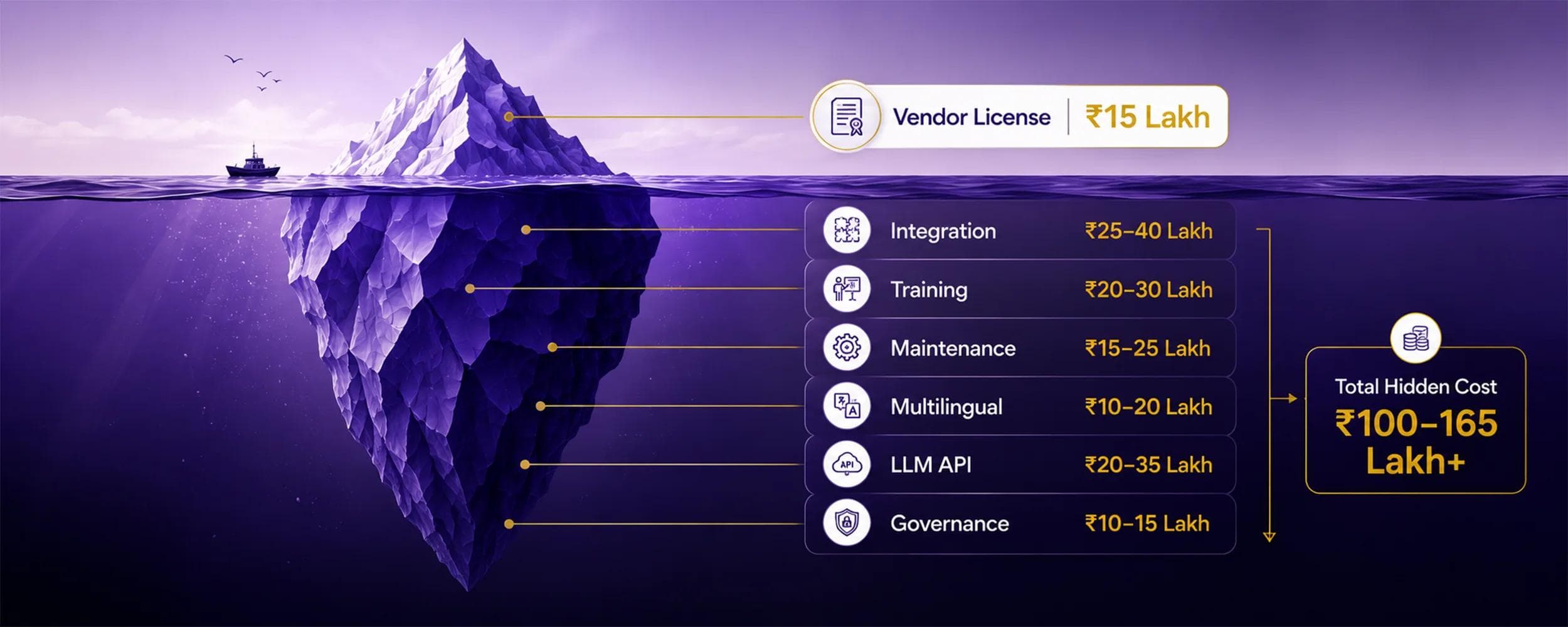
The resources being wasted here are not trivial. Indian SMEs collectively spend an estimated Rs 30,000 crore annually on digital marketing, technology adoption, and transformation initiatives. The majority of that investment is not compounding. It is being consumed by activity that looks productive on a dashboard and produces nothing at the bottom line.
This is not a critique of ambition. Every business owner who made that investment was doing what they were told by consultants, agencies, and industry events. They were told to go digital. They went digital. The failure is not in the intent. The failure is in the model. And the model has a specific set of identifiable flaws.
Before we get to those flaws, it is worth understanding what it actually takes to start an online business in India that generates consistent revenue rather than activity.
The 80/20 Split: Why Most Indian SMEs Fail and What the Successful Ones Do Differently
The Pareto principle shows up with unusual consistency in Indian SME digital transformation. Roughly 80 percent of businesses that invest in digital channels, technology, or automation see no meaningful improvement in revenue, lead quality, or operational efficiency within twelve months. The remaining 20 percent see compounding gains that create sustainable competitive advantage.
The natural assumption is that the 20 percent are spending more money. They have bigger teams, better agencies, more sophisticated technology. This assumption is incorrect, and it matters because it leads the 80 percent to believe their problem is budget when their real problem is thinking.
The 20 percent who succeed are not necessarily running larger budgets. Many of them are scrappier than the businesses failing around them. What they have is a coherent mental model that connects every digital decision to a specific business outcome. They do not ask whether a particular tool or channel is worth exploring. They ask what outcome they are trying to drive, and they work backwards from that outcome to the minimum viable set of actions that will achieve it.
“The gap between the 80% and the 20% is not budget. It is the presence or absence of a strategy that connects every digital move to a business outcome.”
The 80 percent approach digital transformation as a collection of purchases. They buy a website. They buy an ad campaign. They buy a social media retainer. Each purchase feels like progress. None of them are connected to a thesis about how the business generates and retains customers. Without that thesis, all of it is decoration.
The 20 percent approach digital transformation as infrastructure. They ask what the customer acquisition engine looks like at scale, what the retention loop looks like, what data they need to make decisions, and what the minimum technical foundation is that makes all of this possible. Then they build that foundation before they scale anything.
The difference in outcomes is not surprising once you understand the difference in the question being asked at the start.
The 5 Ways Indian SMEs Quietly Bleed Money Online
These are not obscure failure modes. They are common, well-documented, and preventable. And yet they repeat endlessly because the incentive structures in the Indian digital marketing industry make them profitable for vendors while being catastrophic for clients.
1. Confusing Activity with Strategy
This is the most common and most expensive failure mode. A business invests in a website. Then they run Meta ads. Then they start posting on LinkedIn three times a week. Then they add Google Search campaigns. Then they hire someone to send email newsletters. Each of these decisions happens in isolation, triggered by a recommendation from a vendor or a competitor observation, with no overarching logic connecting them.
The website has no SEO architecture because the web designer was hired for aesthetics, not search. The Meta ads drive traffic to that same website, which has no conversion mechanism. The LinkedIn posts get engagement from other marketers but reach no actual buyers. The Google Search campaigns burn budget on keywords that would convert if there were a functioning landing page, but there is not one.
These are activities. They are not a strategy. A strategy is a sequence of connected decisions that, together, move a prospect from awareness to preference to purchase. Activities without strategy do not add up. They cancel each other out.
High Effort, Zero Bottom-Line Impact
Every channel can generate a metric. Websites generate sessions. Ads generate impressions. Social posts generate likes. None of these are business outcomes. When there is no connecting logic between channels and outcomes, every effort consumes budget while producing comfort metrics that obscure the absence of real results.
The test is simple. Ask yourself or your agency: if someone sees our ad, clicks it, lands on our website, and reads the page, what specific action do we want them to take next? What happens after they take it? What data do we capture? How does that data change what we send them? If you cannot answer every part of that chain, you have activities, not a strategy.
2. Hiring Agencies That Speak Jargon Not Revenue
The Indian digital marketing agency landscape is enormous. There are hundreds of thousands of registered agencies and freelancers operating across the country, ranging from sophisticated performance-focused firms to vendors who resell the same templated services under different branding to dozens of clients simultaneously.
The single most reliable way to identify an agency that will consume your budget without producing business results is to listen to the language they use in their proposals. Agencies fluent in reach, impressions, engagement rate, follower growth, and brand awareness but completely silent on cost per acquisition, pipeline contribution, revenue attribution, and customer lifetime value are telling you exactly what they are optimizing for.
They are optimizing for metrics they can control and that look good in reports. Impressions are controllable. You spend money and you get impressions. Cost per acquisition requires the agency to be accountable for the entire funnel, including factors outside their direct control. Agencies that cannot or will not make that commitment are not performance partners. They are media resellers.
Budget Spent, Business Unchanged
Vanity metrics are comfortable for agencies because they are always achievable. Any budget can generate impressions. Any content can generate some likes. The comfort of these metrics is precisely what makes them useless. A business that optimizes for impressions is not optimizing for revenue. It is paying for the appearance of progress.
When evaluating any digital marketing agency, require them to answer three questions in writing before signing anything. First: what specific KPI will you be held accountable for, and how is it calculated? Second: what baseline are we starting from, and what improvement do you project by when? Third: what happens if you do not hit that projection? Any agency that cannot answer these questions with specificity is not a performance partner. They are a vendor.
The criteria for hiring a digital marketing agency in India should be built around accountability for outcomes, not the size of their client logos.
3. Operating Without Data or KPIs
The most common response when you ask an Indian SME owner how their digital marketing is performing is a pause followed by a reference to what their agency told them last month. They can tell you their follower count. They can tell you their website traffic number if they remember to check Analytics. What they cannot tell you is where their last ten customers came from, what it cost to acquire each of them, and which channel had the best return.
Making month-to-month marketing decisions based entirely on gut feel, anecdotal feedback, and agency-provided reports is the operational reality for the majority of Indian SMEs running digital campaigns. There is no conversion tracking on the website. There are no defined KPIs that the team reviews weekly. There is no understanding of the customer journey from first touch to closed deal.
You cannot improve what you cannot see. This sounds obvious, but the structural reality is that most Indian SMEs have invested in the channels of digital marketing without investing in the measurement infrastructure that tells you whether those channels are working. They are flying without instruments.
The fix is not complicated but it requires prioritization. At minimum, every business with a digital presence needs conversion tracking on every page with a contact form, phone number, or transaction. They need UTM parameters on every paid and organic link so traffic sources are identified at the individual lead level. They need a weekly dashboard that shows cost per lead by channel, lead-to-opportunity conversion rate, and revenue influenced by each channel.
Measure What Matters
Start with three KPIs only: cost per qualified lead, lead-to-opportunity conversion rate, and revenue closed per channel. You do not need a sophisticated analytics setup to track these. You need a spreadsheet, a discipline of updating it weekly, and enough self-honesty to act on what it tells you.
Without this infrastructure, every optimization decision is a guess. With it, you have a feedback loop that lets you compound gains over time rather than repeating the same mistakes in different channels.
4. The Silo Effect: Disconnected Systems That Kill Lead Flow
Walk into the average Indian SME and map out how information flows between the point where a customer first engages with the brand and the point where they become a paying client. What you will find is a series of disconnected islands connected by manual effort and human memory.
Sales runs entirely on WhatsApp. Individual salespeople maintain their own contact lists. When a salesperson leaves, the contacts leave with them. Marketing runs on a spreadsheet that gets updated intermittently when someone remembers to. Customer records are distributed across someone's Gmail account, a Tally system that only captures invoiced clients, and a folder of business cards that no one has scanned.
When systems do not communicate with each other, the consequences are predictable. Leads that come in through the website get emailed to someone who is in a meeting and forgets to follow up. A prospect who inquired three months ago and was not ready gets lost because there is no automated nurture sequence. A customer who purchased once never gets a follow-up offer because no one knows when their contract renewal date is.
Operational Chaos at Scale
A disconnected system is manageable when you have 10 leads a month. It becomes catastrophically expensive when you scale to 100. Every lead that falls through a crack at scale represents Rs 10,000 to Rs 5,00,000 in potential revenue, depending on your average contract size. The silo effect is not just an operational annoyance. It is a direct revenue leak.
The 20 percent of Indian SMEs who are succeeding have made a deliberate investment in integration. They may not have enterprise-grade CRM systems. But they have a single source of truth for customer information. Every lead that enters their funnel is tracked. Every follow-up is scheduled automatically. Every customer has a record that anyone on the team can access.
The tools to build this are not expensive. A combination of a CRM like HubSpot free tier, a lead capture form that syncs automatically, and a WhatsApp Business API integration can eliminate 80 percent of the lead leakage problem for under Rs 15,000 a month. The reason most businesses have not done it is not cost. It is that no one has taken ownership of it as a priority.
5. Spending on Paid Ads While Starving the Foundations
Paid advertising has a powerful psychological appeal for business owners. It produces immediate, visible numbers. You spend Rs 50,000 on a Meta campaign and within 48 hours you have clicks, impressions, and inquiries to report back to the team. It feels like action. It feels like progress. This feeling is almost entirely disconnected from whether the investment is generating a sustainable return.
The problem with an over-reliance on paid media is structural. Paid advertising is a rental model. You rent visibility for the duration of your spend. The moment the budget stops, the visibility stops. You build no cumulative asset. Every month starts from zero. The only way to maintain the same volume of leads is to maintain or increase the same spend, indefinitely.
Meanwhile, the investments that build compounding value over time — organic search infrastructure, content that ranks and attracts buyers, email lists that can be contacted at zero marginal cost, automation systems that qualify and nurture leads without human intervention, and data infrastructure that makes every optimization decision faster and more accurate — are the investments that most Indian SMEs perpetually postpone.
Short-Term Visibility, Long-Term Fragility
A business built entirely on paid media is one budget cut away from losing all its digital revenue. Every month of paid-only operation is a month in which the compounding assets that would eventually make the paid spend optional are not being built. The result is a business that is permanently dependent on paid media to survive and will never be able to reduce its acquisition cost over time.
The winning allocation is not zero on paid and everything on organic. It is a deliberate ratio that uses paid to generate immediate cash flow while simultaneously investing in the foundations that reduce cost per acquisition over time. A reasonable starting point for most Indian SMEs is 60 percent on paid with measurable CAC targets, 30 percent on SEO and content infrastructure, and 10 percent on marketing automation and data systems.
Understanding the role of strategic web design and development as a foundation for all digital investment is the starting point for any SME serious about sustainable digital growth.
What the Winning 20% Actually Do
The 20 percent of Indian SMEs who consistently extract measurable value from digital transformation are not exceptional. They do not have access to technology or talent that is unavailable to their peers. What they have is a different operating model — one built on a small number of principles that they apply consistently.
They Treat Digital Infrastructure as a Compounding Asset
The businesses in the winning 20 percent have stopped asking whether a particular digital investment will pay off this month. They are asking whether it will make every subsequent investment more productive. A website optimized for search does not just generate traffic today. It generates traffic every month at declining cost per visit. A CRM that captures customer data does not just help with this deal. It makes every future deal faster and cheaper to close.
The 80% ask: what will this campaign produce? The 20% ask: what will this investment compound into over three years?
This shift in time horizon changes every decision. It makes SEO infrastructure worth the 6-month wait for results. It makes CRM implementation worth the 3-month disruption of adoption. It makes content production worth the cost even when immediate traffic is modest. These investments look expensive in month one and look like compounding machines by month eighteen.
They Use AI for Specific Operational Leverage, Not Decoration
Every vendor in India is selling AI right now. AI-powered campaigns. AI-driven insights. AI-generated content. Most of this is marketing language that describes tools that do not materially change business outcomes. The 20 percent are not impressed by AI features. They are impressed by specific, measurable time savings and quality improvements.
The winning SMEs are using AI in three concrete ways. First, for content production at scale: generating first drafts of blog posts, ad copy variations, and email sequences that a human editor then refines. This reduces content production time by 60 to 70 percent while maintaining quality. Second, for lead qualification: using automated chatbots and intake flows that filter out unqualified inquiries before a human salesperson spends time on them. Third, for reporting synthesis: using AI tools to turn raw analytics data into weekly summaries that highlight anomalies and opportunities rather than requiring someone to manually review dashboards.
See how AI transforms performance marketing for Indian businesses that have moved beyond buzzwords to measurable operational gains.
They Make Every Decision With Data, Not Instinct
The 20 percent do not make marketing decisions based on what worked in a previous business, what a competitor appeared to be doing, or what an agency recommended without evidence. They make decisions based on what their own data tells them about their specific customers in their specific market.
This does not require a sophisticated data science team. It requires a consistent discipline of measurement. Every campaign has a defined KPI before it launches. Every KPI is reviewed weekly against a baseline. Decisions to scale, pause, or pivot are made based on what the data shows, not what anyone feels.
The Ruthlessly Outcome-Driven Mindset
The question the winning 20% ask before every digital investment is: how will we know if this worked? If you cannot define success in measurable terms before you start, you are not ready to invest. Define the metric, set the target, set the timeline, and commit to acting on the data regardless of how inconvenient the answer is.
This mindset produces a compounding advantage. Every decision that is made with data and then measured produces a learning. Those learnings accumulate into an understanding of the business's specific customer acquisition dynamics that no agency and no competitor can replicate. It becomes a proprietary asset.
The Magicworks 3-Step Digital Readiness Framework
After working with manufacturing companies, professional service firms, retail businesses, and technology startups across India, we have developed a framework for digital transformation that addresses the specific failure modes described above. It is not a product or a package. It is a sequence of thinking that ensures every subsequent investment builds on a solid foundation.
Step 1: The Digital Audit — Stop the Bleed Before You Scale
The first instinct of most SMEs when they decide to get serious about digital is to add. Add more channels. Add more budget. Add more content. This is the wrong starting point. Before you add anything, you need to understand what you currently have and whether it is working.
A proper digital audit maps four things. First, current marketing performance: what is each existing channel producing in terms of leads, conversion rates, and cost per acquisition? Second, technology stack: what tools do you have, how are they connected, and where are the integration gaps? Third, data infrastructure: is conversion tracking in place, are data sources connected, and can you answer basic customer journey questions from your current data? Fourth, customer journey gaps: where are prospects entering your funnel, where are they dropping out, and what is causing the drop?
Most businesses that go through this exercise discover that a small number of fixable issues are responsible for the majority of wasted spend. The Meta campaign that is running with the wrong objective setting. The website contact form that is not connected to any notification system so leads sit uncontacted for days. The Google Analytics setup that was never configured to track conversions so the agency has been optimizing for traffic rather than leads.
Diagnose Before You Prescribe
A digital audit is not a nice-to-have. It is the minimum responsible starting point for any significant digital investment. Scaling a broken system makes it more broken, faster, and more expensively. The audit pays for itself in the first month by identifying the spend that was already producing nothing.
The audit also establishes a baseline. Without a baseline, you cannot demonstrate progress. Without demonstrated progress, you cannot justify continued investment. Without continued investment, you cannot build the compounding assets that eventually make your digital presence sustainable.
Step 2: The Strategy Blueprint — Replace Random Actions with a Focused Roadmap
Once you know what you have and what it is producing, you can build a strategy that connects every digital channel to a specific business outcome. This is the step that most agencies skip because it requires a genuine understanding of the client's business model, not just their advertising objectives.
The strategy blueprint answers five questions. First: who is the ideal customer, defined not by demographics but by the problem they have, the trigger that makes them look for a solution, and the criteria they use to evaluate providers? Second: what is the most efficient path from first awareness to closed deal for that customer, given our specific market and product? Third: what is the maximum we can spend to acquire a customer and still maintain target margins? Fourth: which channels, given our baseline data, have the strongest signal of reaching that customer at that cost? Fifth: what does the 12-month investment roadmap look like, with sequenced milestones and defined checkpoints?
No generic advice belongs in a strategy blueprint. Every recommendation must be traceable to the revenue model and the customer acquisition journey. Every rupee in the proposed budget must have a specific job to do — reaching a defined audience, driving a defined action, producing a defined outcome.
Every Rupee Gets a Job
The discipline of the strategy blueprint is that no budget item survives without a clear answer to: what action does this produce, what is that action worth, and how will we know if it happened? This discipline feels restrictive at first. In practice it eliminates 40 to 60 percent of the activity that was consuming budget without producing results.
The blueprint should be a living document, not a one-time deliverable. It gets updated quarterly based on what the data is showing, what the market is doing, and what the business priorities are. The goal is not to predict the future. It is to create a decision-making structure that makes it impossible to make an investment without being clear about why you are making it and how you will evaluate it.
Step 3: AI and Automation — Scale Without Proportional Headcount
The third step only becomes available once the first two are in place. Automation and AI are multipliers. They take a functioning system and make it faster and more efficient. Applied to a broken system, they make the breakage happen faster and more expensively.
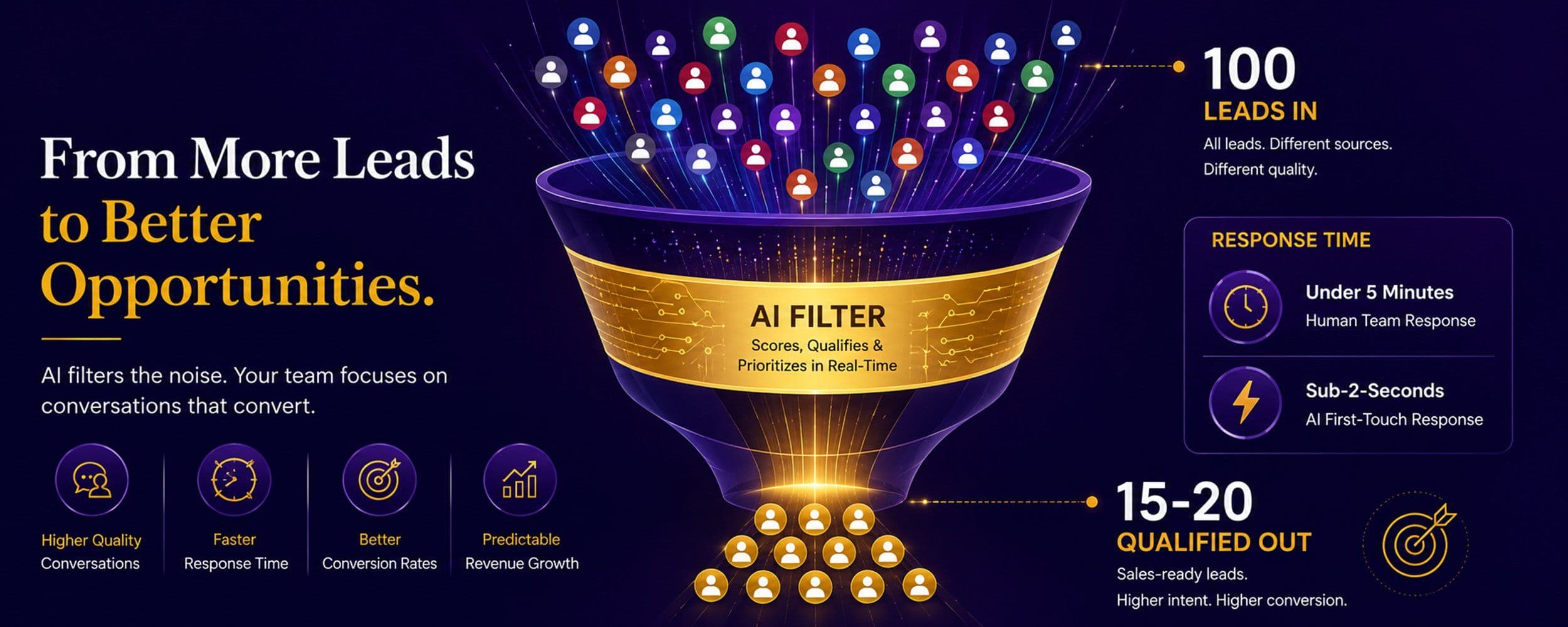
Once the foundation is solid — measurement is in place, strategy is defined, the customer journey is mapped, and the primary channels are validated — AI and automation create the highest leverage available to an Indian SME. The economics are compelling. Tasks that previously required human hours can be handled by systems that operate 24 hours a day at a fraction of the cost.
The three highest-leverage automation investments for Indian SMEs are the following. Lead qualification automation: a system that captures inquiries from all channels, scores them against defined criteria, and routes qualified leads to sales while automatically nurturing unqualified ones over time without human intervention. Content amplification automation: a system that takes a single piece of well-researched content and automatically reformats it for multiple channels — social posts, email newsletters, ad copy variations — reducing the human time required for distribution by 70 percent. Reporting automation: a system that pulls data from all channels weekly, synthesizes it into a decision-ready summary, and flags anomalies without requiring someone to manually log into five different platforms.
Scale the System, Not the Headcount
The goal of automation is not to eliminate people. It is to ensure that every human hour in the business is spent on tasks that genuinely require human judgment — building relationships, making strategic decisions, creating original thinking — while systems handle the repetitive, high-volume tasks that were previously consuming that human time at a lower return.
At this stage, the business is no longer dependent on any single channel, any single vendor, or any individual's memory of who was supposed to follow up with whom. It has a system. And systems scale.
Industry-Specific Failure Patterns in Indian SMEs
The five failure modes described above are universal. But they manifest differently across industries, and understanding the industry-specific patterns helps businesses diagnose their own situation more quickly.
Manufacturing: Intent-Based Targeting Is Non-Negotiable
Indian manufacturing SMEs — particularly those in B2B supply chain, components, and contract manufacturing — consistently struggle with digital lead generation because they apply B2C advertising logic to a B2B buying journey.
A procurement manager at a Tier 1 auto component company does not discover vendors through Instagram ads. They discover them through Google searches with very specific technical queries, through industry directories, through LinkedIn where they can verify credentials, and through referrals that they can then research online. Running generic awareness campaigns on B2C channels for B2B manufacturing products is one of the most common and most expensive mistakes in this sector.
The fix: invest in intent-based targeting — Google Search campaigns that capture buyers who are actively searching for your specific product or service, SEO content that answers the technical questions your buyers are asking, and LinkedIn outreach to decision-makers at your target accounts. These are not glamorous tactics but they are the ones that produce qualified B2B leads in manufacturing.
The Indian B2B marketing strategy gap is documented extensively — most B2B SMEs are running B2C playbooks in B2B markets and wondering why conversion rates are abysmal.
Professional Services: Trust Cannot Be Purchased with Ads
Law firms, chartered accountancy practices, management consultancies, architecture firms, and other professional service businesses in India have a unique digital challenge. Their product is trust. Trust is not built through advertising. It is built through demonstrated expertise.
The consistent failure mode for professional services SMEs is running paid ads that interrupt potential clients with a message they have not asked for, rather than building the content infrastructure that allows potential clients to find the business when they are actively seeking expertise. A CA firm running Facebook ads to generate tax filing leads is spending money on the wrong problem. A CA firm publishing monthly content on GST compliance, tax planning strategies, and MSME financial management is building a library of expertise that attracts qualified prospects continuously at declining cost.
Trust-building requires thought leadership, not advertising. In practice this means a consistent investment in content — articles, case studies, detailed guides — that demonstrates genuine expertise and builds the kind of credibility that converts high-value professional service clients.
Retail: E-Commerce vs. Marketplace Strategy Confusion
Indian retail SMEs attempting to go digital face a strategic fork that most of them handle by defaulting to the most obvious path: list on Amazon and Flipkart, run some social ads, and wait. This is not a strategy. It is market access, and it comes at a significant cost.
Marketplace dependency creates structural vulnerability. When your entire digital revenue depends on platforms that control their own search algorithms, fee structures, and ranking systems, you do not have a digital business. You have a digital dependency. The businesses that are winning in Indian retail have a different model: they use marketplaces for discovery and volume while simultaneously building a direct-to-consumer channel that gives them control over pricing, customer data, and long-term profitability.
The e-commerce versus marketplace question is not either/or. The winning structure is marketplace for acquisition at scale, owned channel for retention and margin. Getting to that structure requires investment in a direct website, an email and WhatsApp list, and a loyalty mechanism that incentivizes repeat purchase outside the marketplace environment.
SaaS and Technology: The CAC Math Is Broken Without Correct Attribution
Indian SaaS companies and technology product businesses face a specific version of the data problem. They tend to have sophisticated tools in place — Google Analytics, Mixpanel, HubSpot, Salesforce — but the attribution between marketing spend and actual closed revenue is often deeply broken because of how the data flows between these systems.
The result is that the marketing team is optimizing for leads. Sales is optimizing for deals closed. And no one has a clear picture of which marketing activity actually produced which revenue. This attribution gap means that budget allocation decisions are being made without an accurate understanding of which channels are generating the customers with the best lifetime value and the shortest sales cycle.
The fix requires a deliberate integration project: connecting the CRM to the analytics platform at the lead level so that every closed deal can be traced back to its original acquisition source. This is a 2 to 3 week technical project for most SaaS businesses. The resulting attribution data typically reveals that 2 or 3 channels are driving 80 percent of high-quality revenue, and that several other channels consuming significant budget are producing low-quality leads that drain sales resources.
The Cost of Delay: Three Years in the Bottom 80%
Consider a mid-size manufacturing SME in Pune. Annual revenue of Rs 4 crore. Digital marketing spend of Rs 8 lakh per year over the past three years. No measurable attribution. No conversion tracking. Two agency relationships that produced reports but not pipeline.
At year one, the absence of a functioning digital strategy cost approximately Rs 80 lakh in lost revenue — the pipeline that a properly structured digital acquisition system would have generated but did not because the infrastructure was not in place. At year two, the compounding SEO content that should have been building was not built, so organic traffic that could have been delivering qualified leads at zero marginal cost was not materializing. At year three, the CRM and automation infrastructure that would have been reducing sales cycle length and increasing retention was still not in place.
The total opportunity cost of three years in the bottom 80 percent, for a business of this profile, is conservatively Rs 2.5 crore in revenue that was available but not captured. Not because the market was not there. Because the system to capture it was not in place.
“Every month spent in the bottom 80% is not just a month of underperformance. It is a month in which your competitors in the top 20% are compounding their advantage. The gap does not stay the same. It widens.”
The cost of delay is not just the revenue not generated. It is the compounding nature of what the 20 percent are building while the 80 percent are running disconnected campaigns. Organic search rankings that take 12 to 18 months to build are being built. Email lists that take 24 months to develop meaningful commercial value are being grown. Brand authority in specific niches that takes years to establish is being accumulated.
The decision to delay is not cost-free. It has a price tag that is larger than most business owners realize, and it grows every month.
If you recognize your business in the patterns described in this article, the right time to change the approach was two years ago. The second right time is now.
Start with a clear understanding of what it takes to build a digital presence that actually performs rather than just exists.
The Questions Every Indian SME Should Be Able to Answer Today
Before commissioning any new digital spend or entering any new agency relationship, every Indian SME should be able to answer the following questions with specific numbers, not approximations.
Where did your last 10 customers come from?
Not a general sense that most customers come from referrals or that the website generates some leads. The exact channel, campaign, or source for each of the last 10 closed deals. If you cannot answer this question, your attribution is broken and every budget decision you make is uninformed.
What is your cost per qualified lead by channel?
Paid search, organic search, LinkedIn, referral, direct outreach — each channel has a specific cost in money and time to produce a single qualified lead. If you do not know this number, you cannot allocate budget rationally. You are distributing resources based on instinct rather than evidence.
What is your lead-to-close conversion rate?
Of all the leads that enter your pipeline, what percentage result in a closed deal? If you are closing 5 percent, acquiring 100 leads costs you 20 clients. If you close 20 percent, you need only 25 leads for the same result. The lead-to-close rate is one of the most powerful levers in customer acquisition economics, and most SMEs do not track it.
What is the lifetime value of your average customer?
Customer lifetime value determines how much you can rationally spend to acquire a customer. A business with a Rs 5 lakh average customer lifetime value can afford to spend significantly more per acquisition than one with a Rs 50,000 average deal. Without this number, every conversation about marketing budget is disconnected from the economics of the business.
Four Questions, One Conclusion
If you cannot answer all four of these questions with specific numbers derived from your own data, your digital marketing is operating without a financial foundation. This is not a technology problem. Every tool needed to track and answer these questions is available, most of it for free or at very low cost. The gap is process and prioritization.
The businesses in the winning 20 percent can answer these questions in real time. Not because they have more sophisticated technology, but because they made the decision months or years ago to build the measurement infrastructure that makes these answers accessible. That decision is available to every SME operating in India today.
How to Evaluate Whether Your Current Digital Investment Is Working
Regardless of how long you have been investing in digital, a quarterly evaluation should answer three questions. First: is the cost per acquisition improving, staying flat, or deteriorating over time? Second: are the compounding assets — organic traffic, email list size, content library, domain authority — growing? Third: is the business less dependent on paid media this quarter than it was last quarter?
If the answers are deteriorating, flat, and no respectively, the system is not working and needs structural intervention, not more budget. If the answers are improving, growing, and yes respectively, the system is working and should be scaled.
The most common reason Indian SMEs stay in a non-working system for too long is that the reporting they receive from agencies obscures this signal. When every monthly report shows improvement in reach, engagement, and session counts, it is easy to convince yourself that progress is being made. The only reliable test is whether the business metrics — leads, pipeline, revenue — are improving. Everything else is noise.
The Three-Question Quarterly Audit
Set a recurring calendar reminder every 90 days to answer: Is my cost per acquisition improving? Are my compounding digital assets growing? Is my paid media dependency decreasing? If the answer to all three is yes, increase investment. If not, diagnose before you spend another rupee.
This is not a complex system. It does not require expensive software or dedicated analysts. It requires a discipline of asking the right questions and having the integrity to act on the answers.
Sources and Data
1. Ministry of Micro, Small and Medium Enterprises, Government of India: Udyam Registration Data 2024 — MSME count and distribution across sectors and states.
2. IAMAI and Kantar: India Digital Marketing Report 2024 — digital advertising market size, growth projections, and SME adoption rates across India.
3. Deloitte India: State of Digital Transformation in Indian SMEs 2023 — survey of 1,200 SME owners and managers on digital adoption, investment levels, and perceived outcomes.
4. Razorpay SME Digital Finance Report 2024 — data on SME digital spending patterns, payment infrastructure adoption, and e-commerce channel distribution.
5. Google and Bain and Company: India Digital Opportunity Report 2024 — internet user growth projections, mobile-first usage patterns, and SME digital readiness benchmarks.
6. HubSpot State of Marketing India 2024 — data on CRM adoption, conversion tracking practices, and attribution methodology among Indian B2B and B2C marketing teams.